
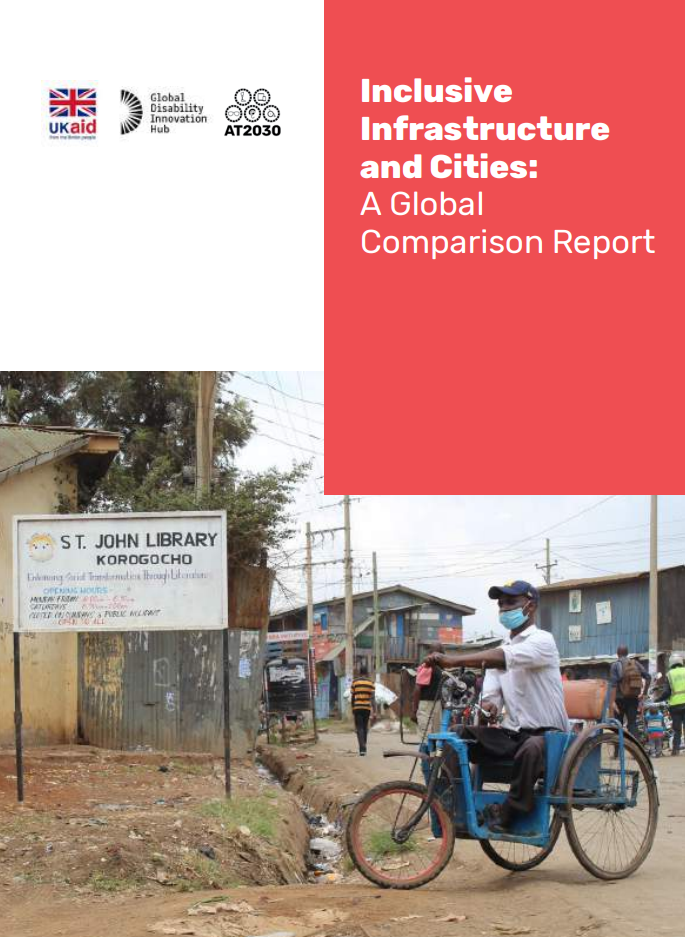
Between 2020 and 2023, four years of research in six cities in lower-and-middle-income countries, led by the Global Disability innovation Hub (GDI Hub) under the UK Aid funded AT2030 programme, has explored the current state of accessibility and inclusion in cities, with the intention of understanding how inclusive design can deliver more inclusive and accessible…
All Resources
Showing 191 - 200 of 488
Results are ordered by date, with most recent published resources shown first.
Use the other filters to customize your search.
Results are ordered by date, with most recent published resources shown first.
Use the other filters to customize your search.
This report summarises the proceedings of a 1-day workshop held by TIDAL Network + at Salford University on 16th May 2024. The workshop explored the repair of assistive products in the UK, with a particular focus on prosthetics and orthotics. This project was funded by the Engineering and Physical Sciences Research Council through TIDAL Network Plus - Transformative…
This research summary highlights findings on mobile phone usage among assistive technology users in Indonesia and Sierra Leone, exploring accessibility, usage patterns, and inclusion.
The document presents a monitoring and evaluation framework for the National Health Plan 2021-2030. It outlines key results areas (KRAs) and indicators for measuring progress towards the plan's objectives, including indicators for assistive technology access. The KRAs include more engaged communities, working together in partnerships, increasing access to…
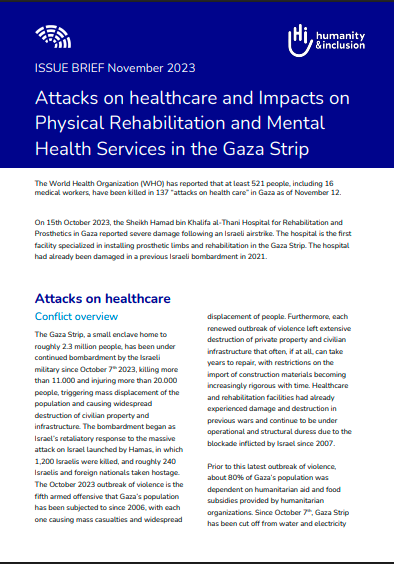
A thematic brief describing the status of rehabilitation and assistive technology access in Gaza.
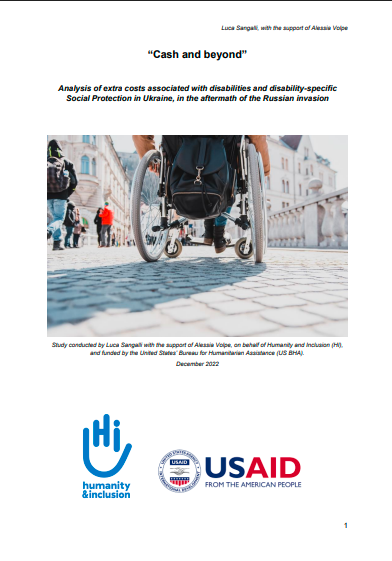
As conflict continues in Ukraine, the humanitarian needs in directly affected areas grow increasingly urgent, especially for households including people with disabilities and older persons. These groups face greater challenges accessing essential services, humanitarian assistance, and assistive technology, intensifying their vulnerability. This report was prepared by…
The second edition of this manual on the use of plaster of Paris (POP) and other immobilization methods for limb fractures was written in collaboration with physiotherapists working in the field. It draws on the expertise of the ICRC’s Physical Rehabilitation Programme in delivering care to people affected by armed conflict, including those suffering from fractures…
The information in these practical guidelines is aimed at the global community of healthcare professionals involved in the care of persons with diabetes and diabetes-related foot disease. The principles outlined may have to be adapted or modified based on local circumstances, taking into account regional differences in the socio-economic situation, accessibility to…
Part of the 2023 IWGDF Guidelines on the prevention and management of diabetes-related foot disease
A chapter on Guidelines for the Diagnosis and Management of Charcot’s Neuro-osteo-arthropathy.