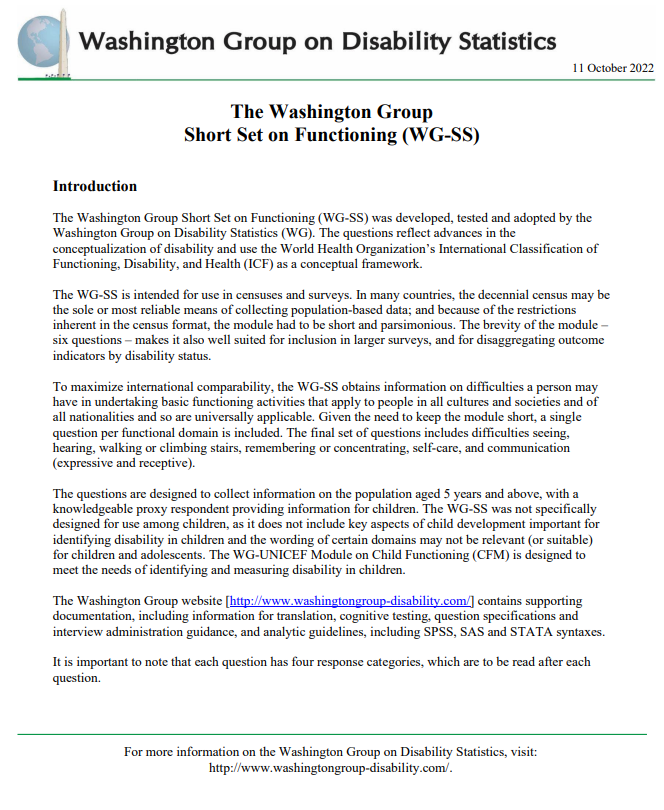
The WG Short Set of six questions on functioning for use on national censuses and surveys was developed, tested and adopted by the Washington Group on Disability Statistics (WG). The questions reflect advances in the conceptualization of disability and use the World Health Organization’s International Classification of Functioning, Disability, and Health (ICF) as a…
All Resources
Showing 271 - 280 of 488
Results are ordered by date, with most recent published resources shown first.
Use the other filters to customize your search.
Results are ordered by date, with most recent published resources shown first.
Use the other filters to customize your search.
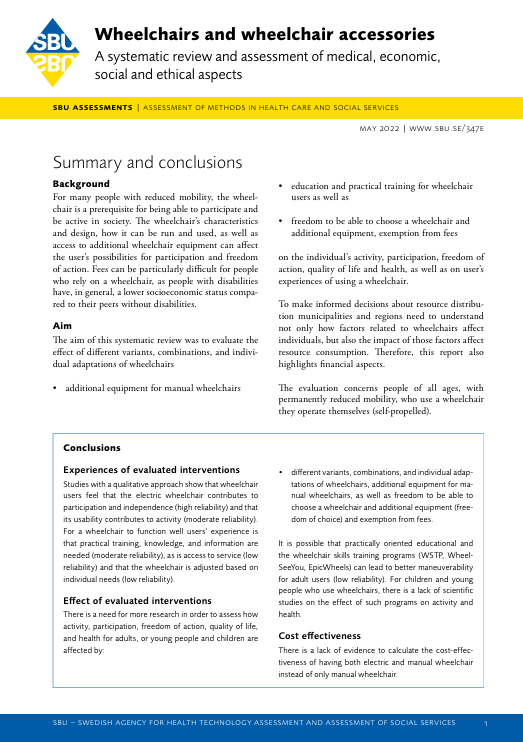
This document is a Swedish report interpreting the evidence from a systemative review and assessment of assessment of medical, economic, social and ethical aspects of wheelchairs and wheelchair accessories.
The document is an evaluation of an Assistive Technology Training Pilot conducted by CooperGibson Research for the Department for Education. The pilot aimed to upskill school staff in identifying and implementing assistive technology for pupils with special educational needs and disabilities in mainstream schools. The training focused on raising awareness of…
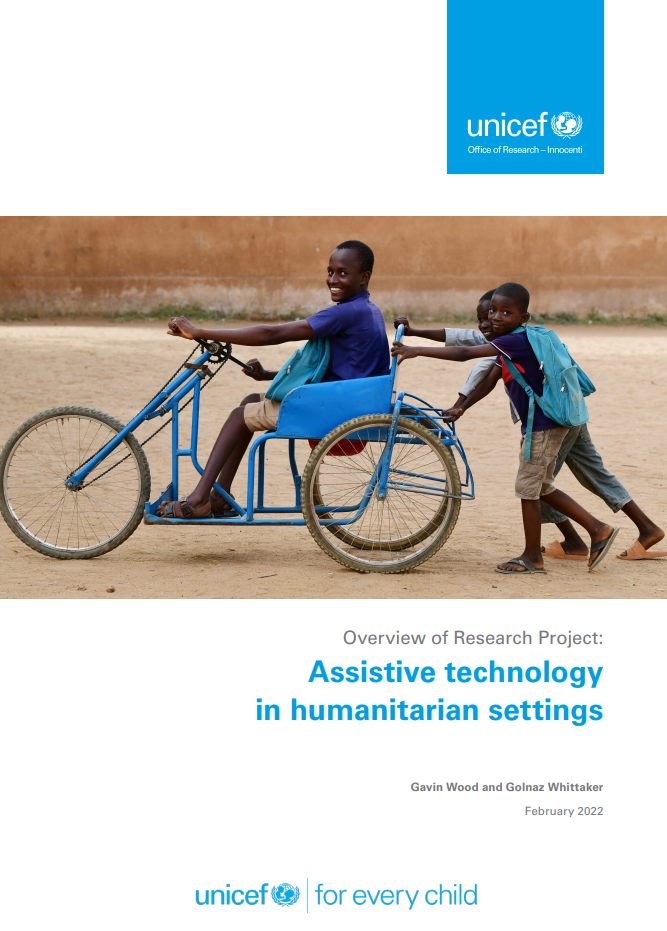
The Overview of research document provides a synthesis of the project’s various reports and papers: (1) a thematic literature review summarizes the academic evidence base regarding the provision of AT in humanitarian settings, including the nature and scale of provision and barriers and facilitators of access and provision; and (2) three case studies of countries…
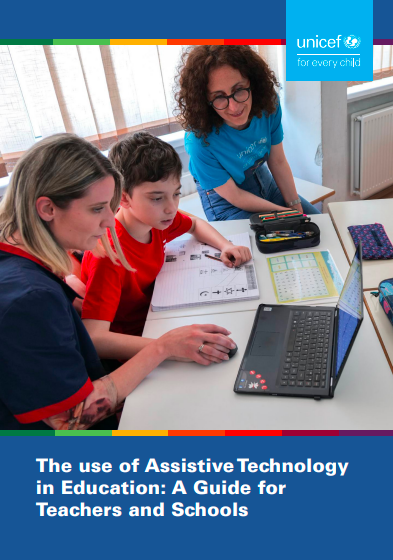
This guide provides educators with comprehensive strategies for integrating assistive technology (AT) into classrooms, enhancing learning experiences for students with disabilities.
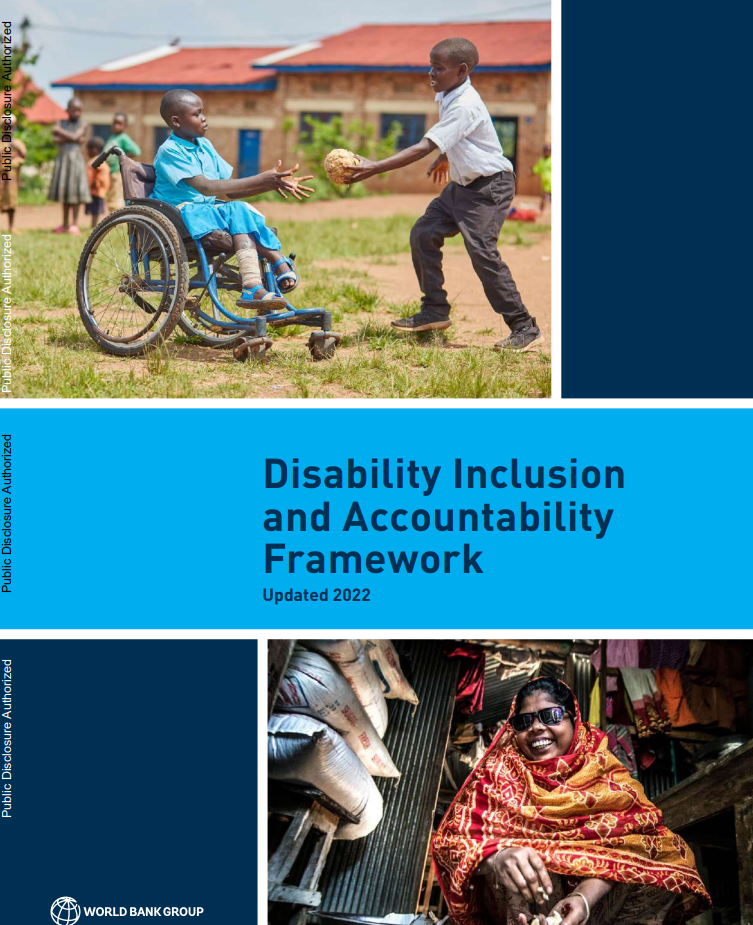
Strategic framework integrating disability into World Bank operations.
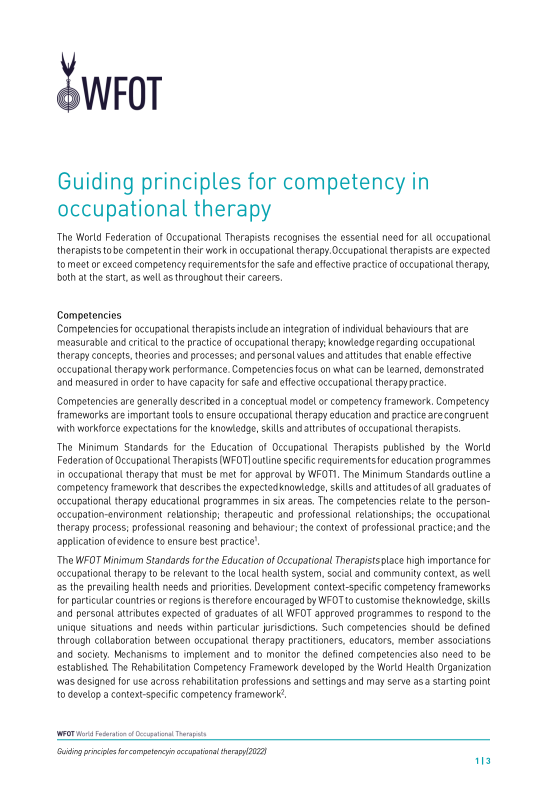
The primary objective of this document is to outline the ethical principles, values, and beliefs of the World Federation of Occupational Therapists. However, the document may also serve as a useful guide for member associations in developing their own Code of Ethics within their local context.
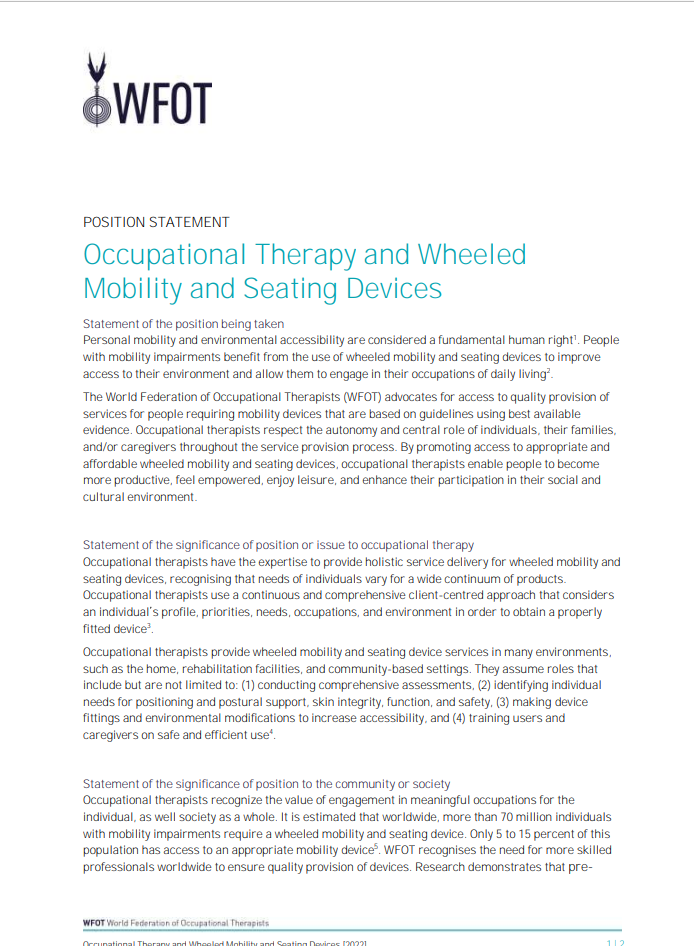
WFOT's position on Occupational Therapy and Wheeled Mobility and Seating Devices
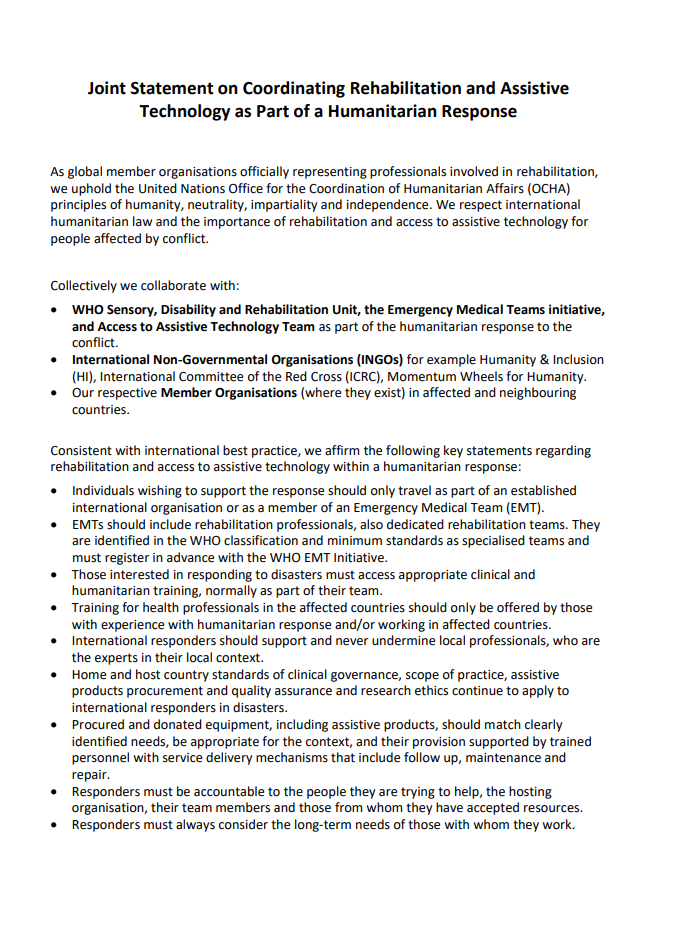
The World Federation of Occupational Therapists has collaborated with the following organisations to publish a Joint Statement on Coordinating Rehabilitation and Assistive Technology as Part of a Humanitarian Response:
- International Association of Communication Sciences and Disorders
- International Spinal Cord Society
- International Society for Prosthetics and…
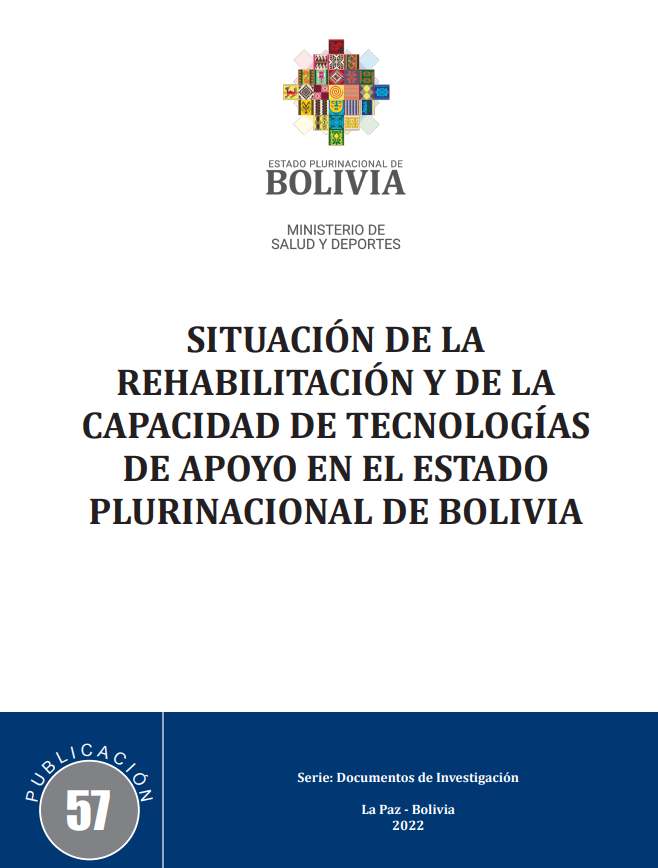
A report outlining the first learnings from the implementation of ATA-C in Bolivia