This landmark resolution underscores that all persons with disabilities have the right to the highest attainable standard of health without discrimination. It calls on Member States and WHO to remove barriers; physical, informational, attitudinal, financial — so that health services, public health interventions, and emergency responses are accessible and inclusive.
All Resources
Showing 381 - 390 of 488
Results are ordered by date, with most recent published resources shown first.
Use the other filters to customize your search.
Results are ordered by date, with most recent published resources shown first.
Use the other filters to customize your search.
Liberia’s national list of priority assistive products, developed to guide policy, procurement, donations, standards, workforce planning and service delivery across functional domains.
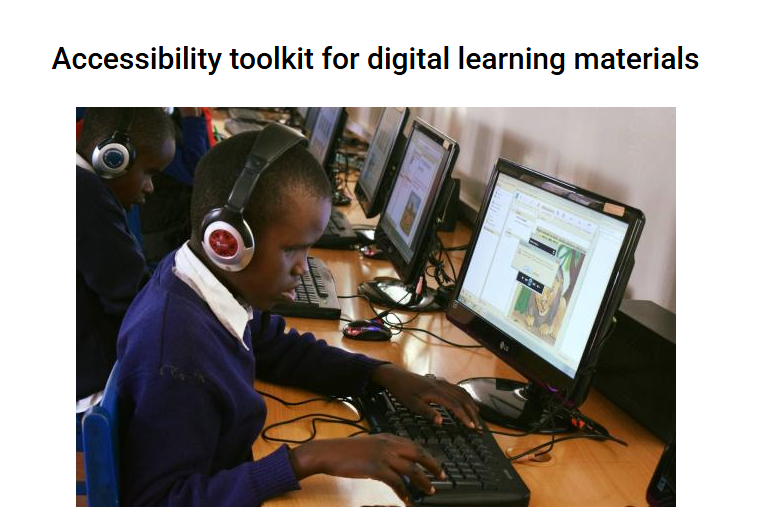
A collection of practical guides to creating accessible learning materials in Word, PowerPoint, PDF, EPUB and video formats. The toolkit helps educators and content developers improve access for learners using assistive technology, including screen readers. Each guide is available as an accessible Word document and PDF. The listed guides were updated in September…
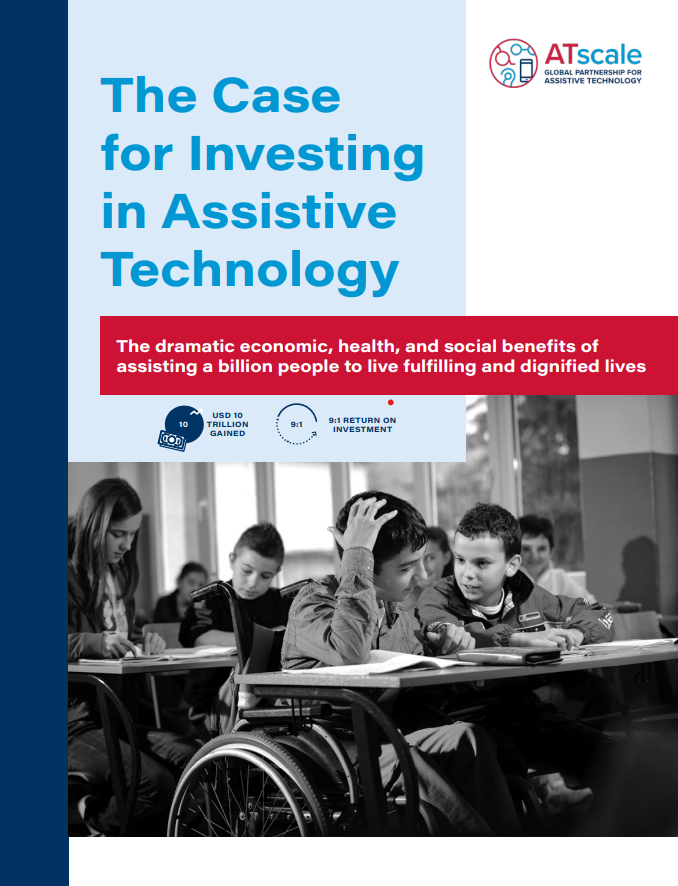
In this new report, ATscale describes the enormous gains that access to assistive technology (AT) can have in health, for the community and the economy. The figures are dramatic: investment in the provision of four assistive products – hearing aids, prostheses, eyeglasses, and wheelchairs – will result in a return on investment of 9:1.
Examines the global eyeglasses market, identifies critical barriers to access, and proposes strategies to improve affordability and distribution of eyeglasses, especially in underserved regions.
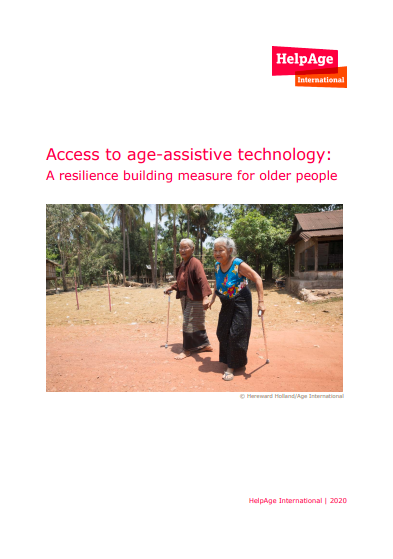
This report explores the intersection between age, gender and disability and the use of Assisted Technology (AT) by older people, in emergency response and as a tool for disaster risk reduction. The report shows that AT can have a positive impact on independence, vulnerability reduction and resilience building for older women and men in humanitarian crises.
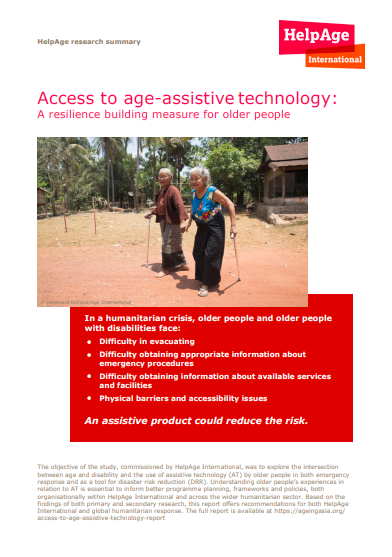
The objective of the study, commissioned by HelpAge International, was to explore the intersection between age and disability and the use of assistive technology by older people in both emergency response and as a tool for disaster risk reduction.
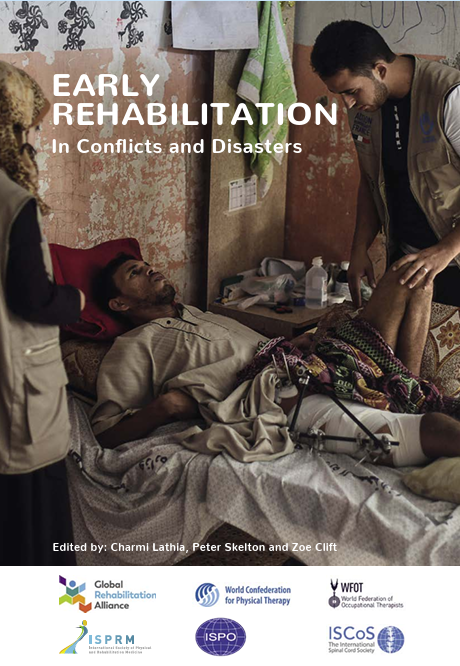
Early rehabilitation is now recognized as being an integral part of a patient’s recovery in conflicts and disasters. Starting in acute care, early rehabilitation can help prevent complications, speed recovery, and help ensure continuity of care. Rehabilitation professionals working in early rehabilitation need skills across a wide range of clinical areas, and in…
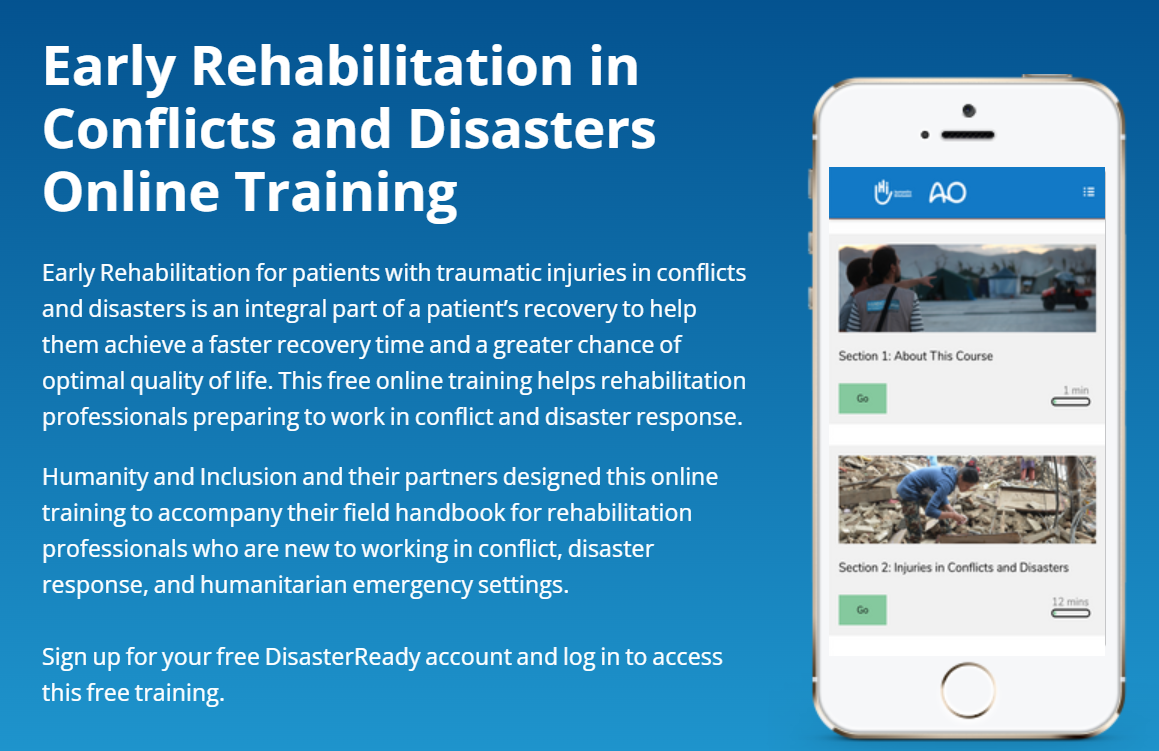
This online training supports implementation of the Early rehabilitation in conflict and disasters guide.
A dynamic platform for global eye health data, trends and insights — informing critical decisions and action.