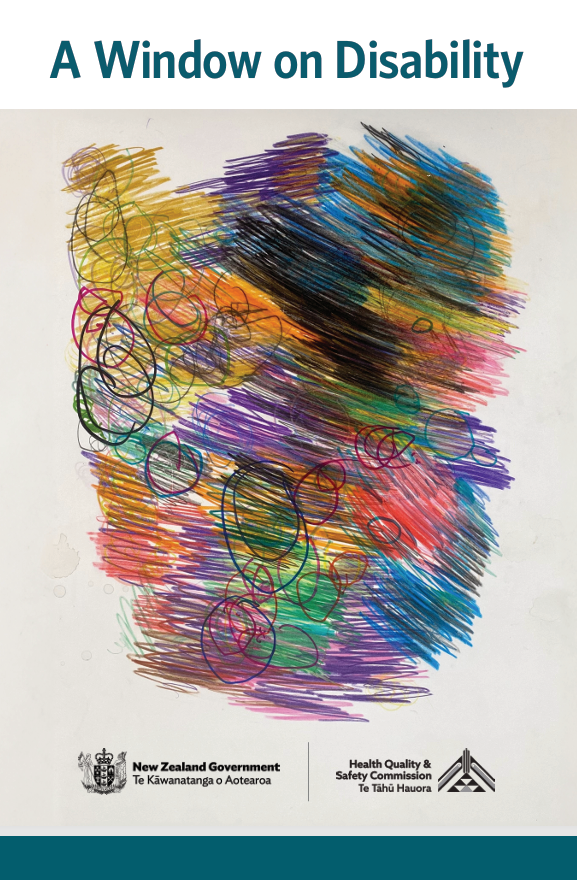
A disability-led, life-course report combining community engagement and research with analysis of New Zealand health data to show how disabled people and their whānau experience the health system. It identifies major inequities in access, quality and outcomes, gaps in disability data, and practical priorities for disability-inclusive health services, workforce…
All Resources
Showing 11 - 20 of 488
Results are ordered by date, with most recent published resources shown first.
Use the other filters to customize your search.
Results are ordered by date, with most recent published resources shown first.
Use the other filters to customize your search.
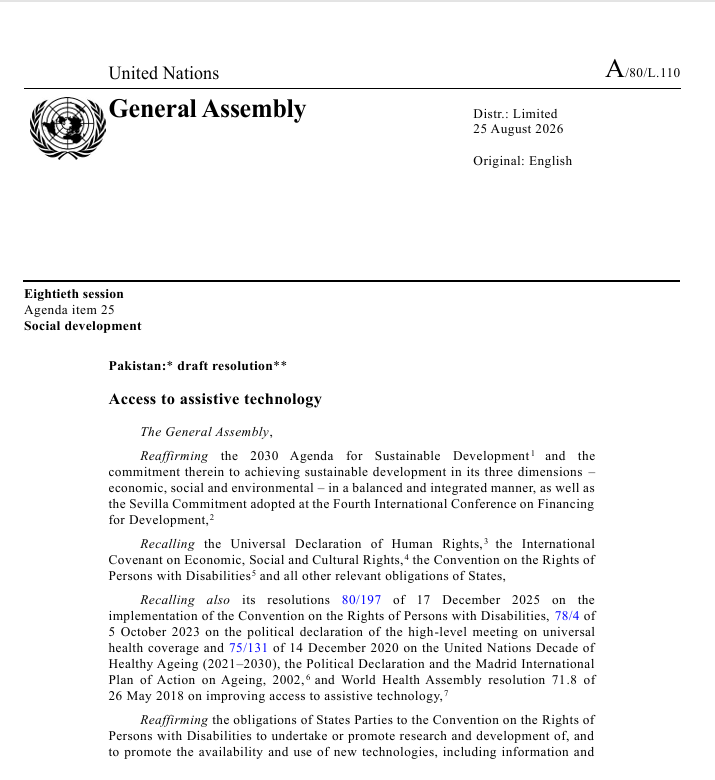
The UN General Assembly has adopted its first resolution on Access to Assistive Technology, led by Pakistan and supported by over 40 countries. This milestone puts assistive technology firmly on the global agenda — recognising it as a fundamental right and a key part of health, education, employment and social participation.
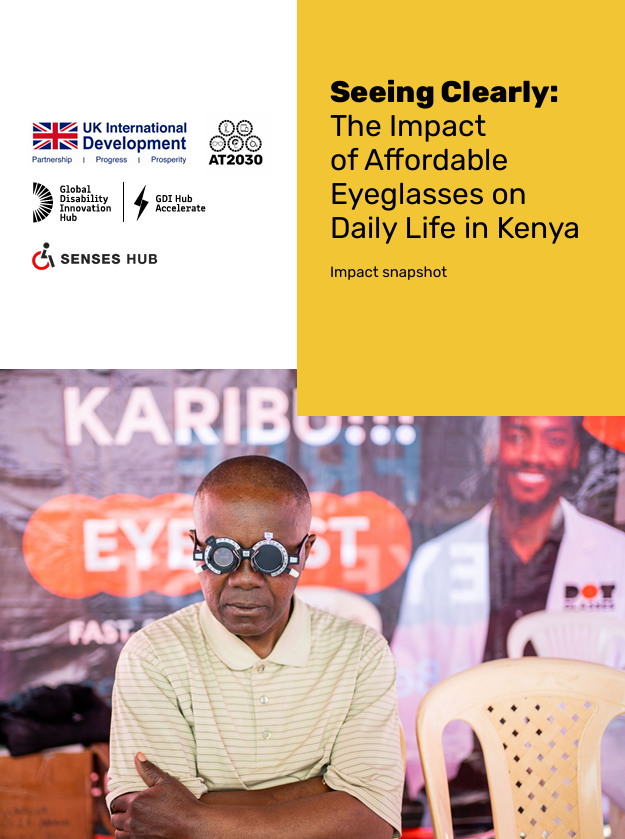
An impact snapshot from a Kenyan field trial of a simplified, affordable eyeglass-delivery model, reporting users’ experiences of reading, phone use, schoolwork, mobility, independence and confidence.
This research report examines how people who are blind, deafblind or have low vision learn to use personal digital technology and how effectively current instructions support independent use. Drawing on a literature review, environmental scan, survey and interviews, it identifies barriers in clarity, findability, currency and format, and recommends accessible…
Practical guidance on repairing, refurbishing and recycling self-care and mobility assistive products using the WHO-GATE 5P model and circular economy principles. Includes tools and templates for referral pathways, inspection, quality assurance, spare-parts and materials management, and sustainable product-lifecycle practices.
The Technical Report on Assistive Technology and International Trade develops a comprehensive overview of international trade, import tariffs, local taxes and policy regimes for hearing aids, prostheses and orthoses, spectacles and wheelchairs in five African countries: Chad, Egypt, Kenya, Mozambique and the Republic of the Congo. It identifies the main barriers and…
This critical study maps the complex landscape of trade flows, import tariffs, and local taxes in the African continent, with a deep dive on five select countries (Chad, Egypt, Kenya, Mozambique, and the Republic of the Congo) to uncover the structural barriers restricting supply and affordability along the import-to-distributor pathway.
This report presents a consolidated, evidence-based overview of the AT landscape in Africa, with a particular focus on young persons with disabilities. Drawing on a systematic synthesis of 523 sources, including peer-reviewed research, policy documents, organizational websites, and contextual materials, the report examines AT access, policy environments,
market…
This report presents the findings of Ireland’s assistive technology (AT) capacity assessment. Using the WHO Global Cooperation on Assistive Technology 5P framework (people, policy, products, provision and personnel), the assessment evaluates Ireland’s strengths and challenges in delivering equitable access to AT. The report highlights strong advocacy networks,…
Boggle is an award-winning brain-controlled web browser that redefines internet access for people with severe motor impairments. Powered by neural responses to visual stimulation (Steady-State Visually Evoked Potentials), it enables users who cannot rely on traditional assistive technologies, such as eye trackers and switch control, to navigate the web freely.