A guide for education settings developing or updating policy on augmentative and alternative communication. It updates Ace Centre’s earlier school policy guidance for the education context in England and draws on professional and partner-school contributions. The resource supports planning for the inclusion of learners who use AAC.
All Resources
Showing 181 - 190 of 488
Results are ordered by date, with most recent published resources shown first.
Use the other filters to customize your search.
Results are ordered by date, with most recent published resources shown first.
Use the other filters to customize your search.
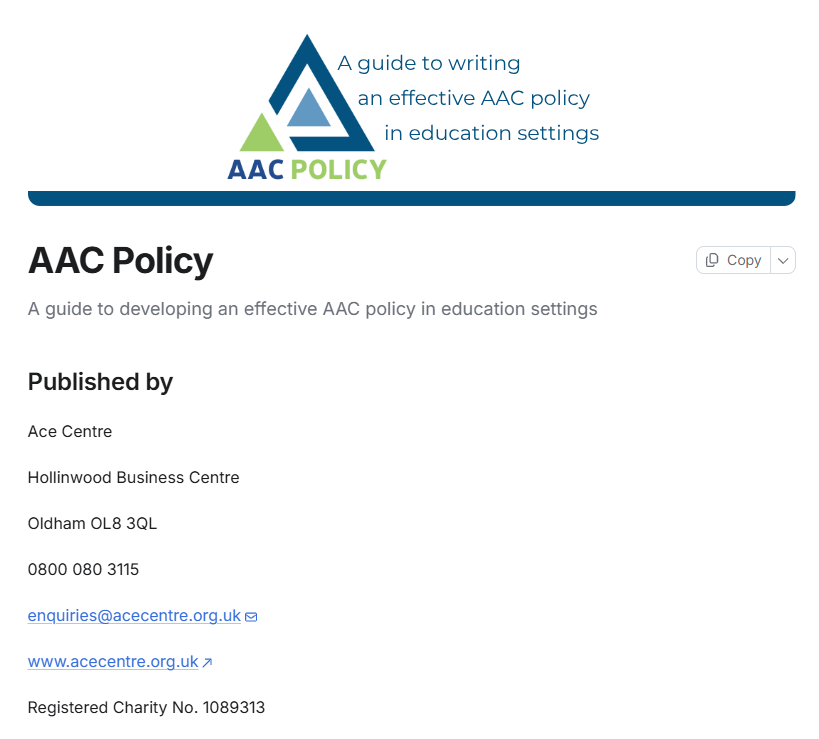
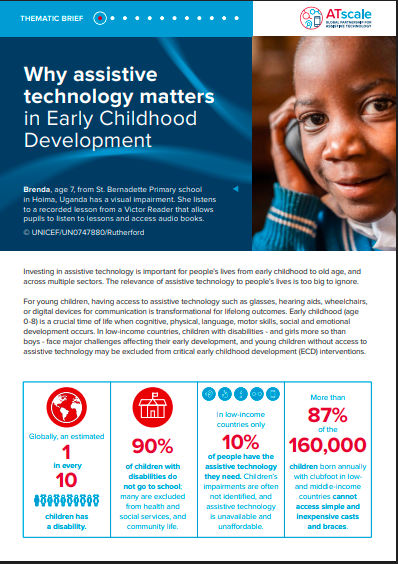
Thematic brief describing why assistive technology matters for early childhood development.
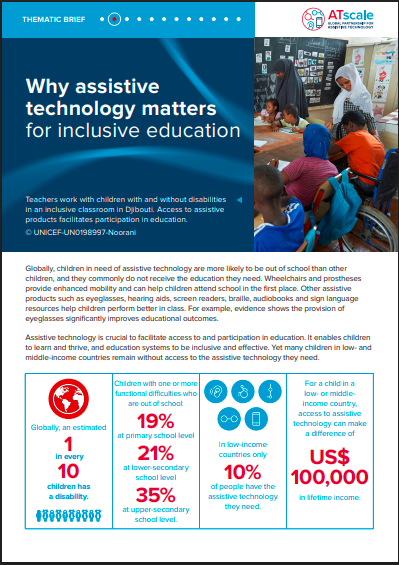
Thematic brief describing why assistive technology matters for inclusive education.
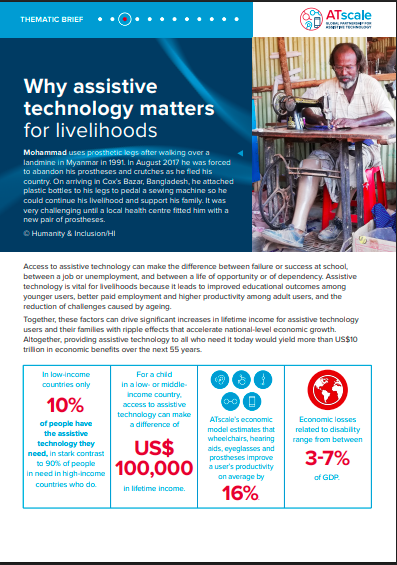
Thematic brief describing why assistive technology matters for livelihoods.
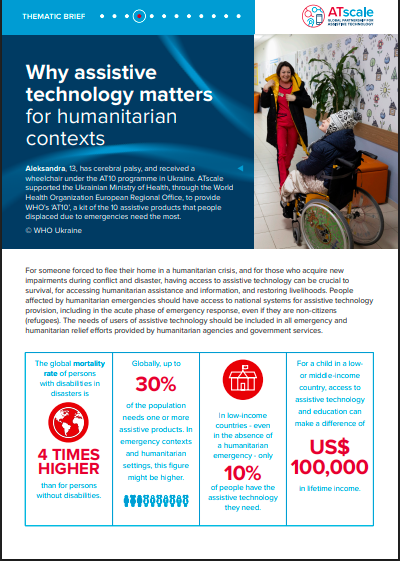
Thematic brief describing why assistive technology matters for humanitarian contexts.
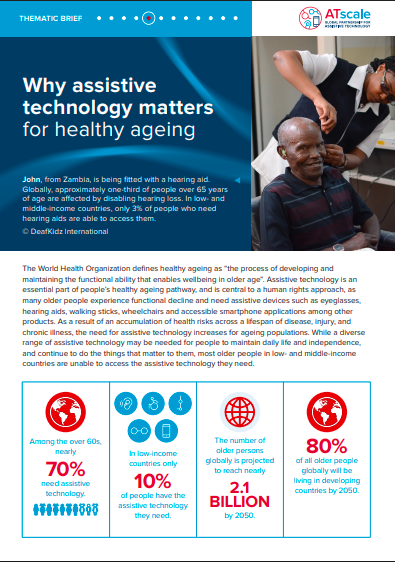
Thematic brief describing why assistive technology matters for humanitarian contexts.
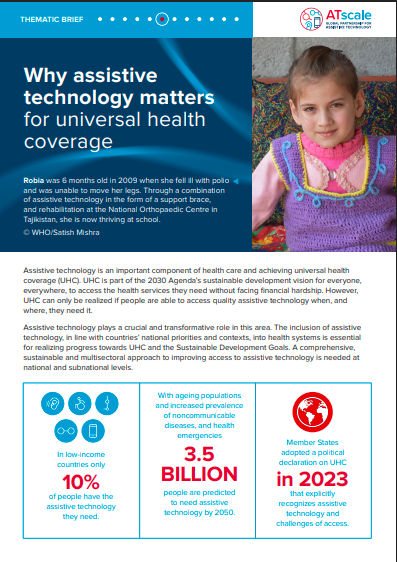
Thematic brief describing why assistive technology matters for universal health coverage.
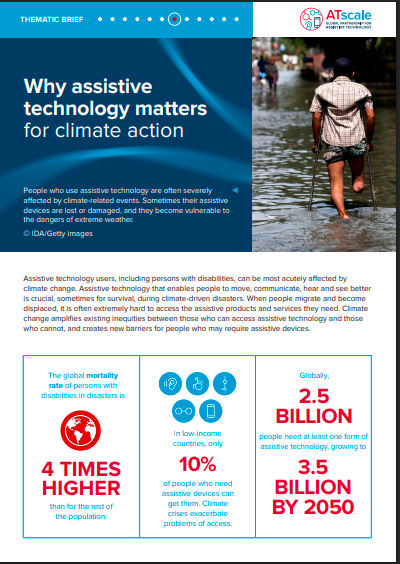
Thematic brief describing why assistive technology matters for climate action.
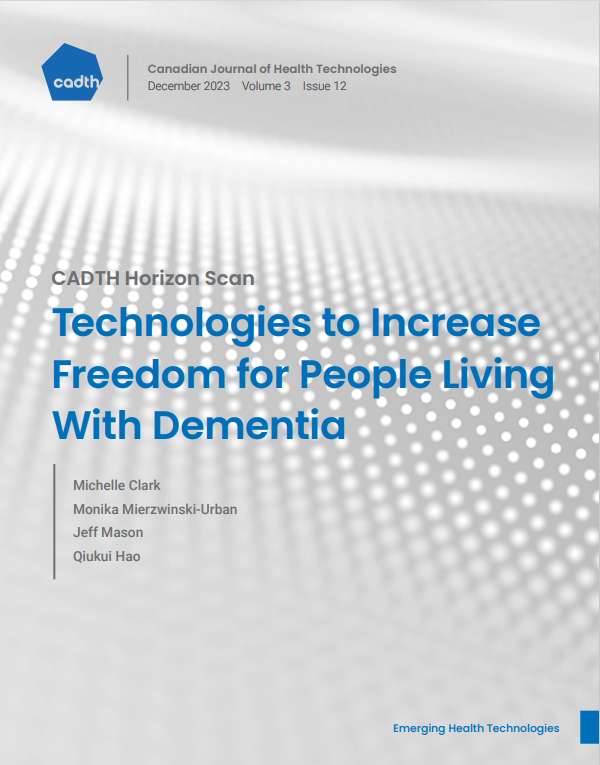
Overview of technologies that support independence for people with dementia, including GPS trackers and fall monitoring systems.

A comprehensive report analyzing barriers to assistive technology access in low-income countries and proposing market-based solutions.