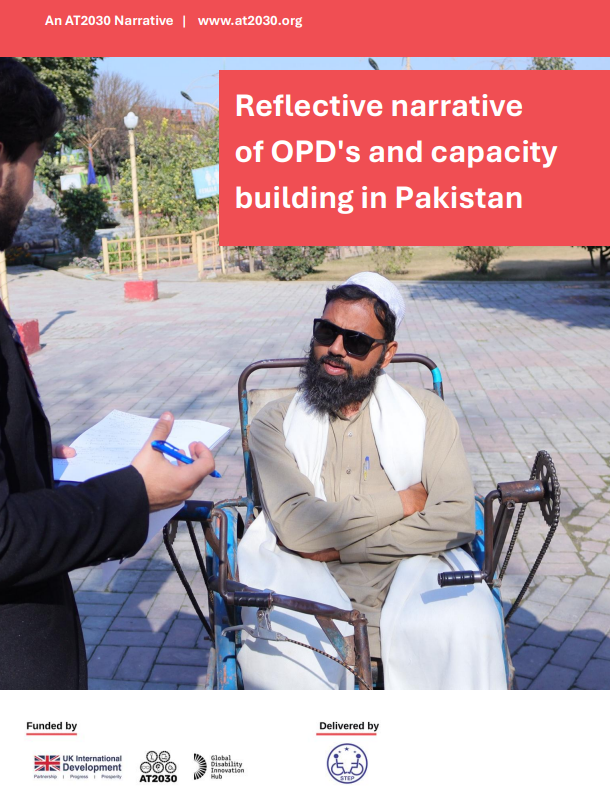
The narrative explores the Organisations of Persons with Disabilities (OPD) ecosystem in Pakistan; highlighting the critical role of capacity building initiatives in fostering systemic change, improving access to life-changing Assistive Technology (AT) and amplifying advocacy efforts for People with Disabilities (PwD)
All Resources
Showing 51 - 60 of 488
Results are ordered by date, with most recent published resources shown first.
Use the other filters to customize your search.
Results are ordered by date, with most recent published resources shown first.
Use the other filters to customize your search.
This product collection provides a comprehensive and neutral overview of the diverse assistive technology market in Germany.
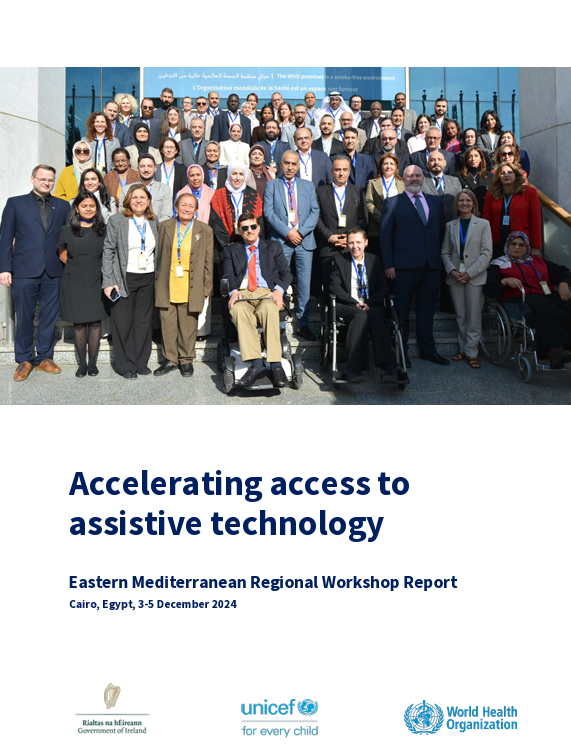
From 3 to 5 December 2024, the World Health Organization (WHO), in collaboration with the United Nations Children’s Fund (UNICEF), convened a regional workshop in Cairo, Egypt, to accelerate access to assistive technology across the Eastern Mediterranean Region. The event brought together 75 participants from 11 countries for an in-depth exchange on policy…
This guide summarizes the existing quality standards for spectacles and their components based on ISO standards for ophthalmic optics. The standards aim to support service providers, including ministries of health, in ensuring that optical products meet quality and safety requirements, providing effective and reliable lenses for users.
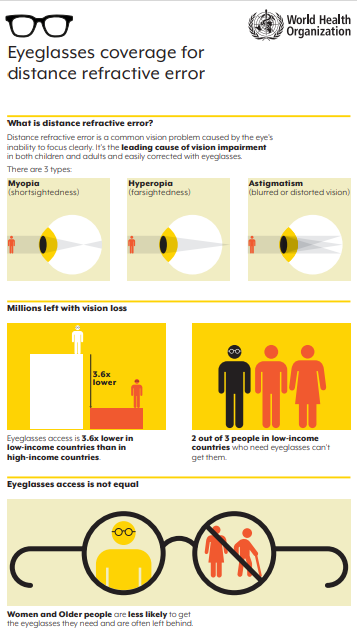
Factsheet about eyeglasses coverage for distance refractive error.
This report presents the findings of a mixed methods assessment, drawing from stakeholder consultations and from nationally representative household surveys. It aims to provide a deeper contextual understanding of the barriers encountered by persons with disabilities in Tanzania. Persons with disabilities experience difficulties when accessing basic services such as…
This publication includes vision and hearing screening for school-age children, implementation handbook provides practical guidance to support the establishment of sensory screening programmes for school-age children. It is intended to be used with the
following resources:
• Vision and eye screening implementation handbook.
• Hearing screening: considerations for…
Between September and November 2023, the WHO Regional Office for Europe conducted an anonymous online survey among rehabilitation workers in five countries in the Region – Armenia, Georgia, Italy, Poland and the United Kingdom. The 32-question survey – which was open to rehabilitation workers from all professions, specialties, grades and work areas – gathered cross…
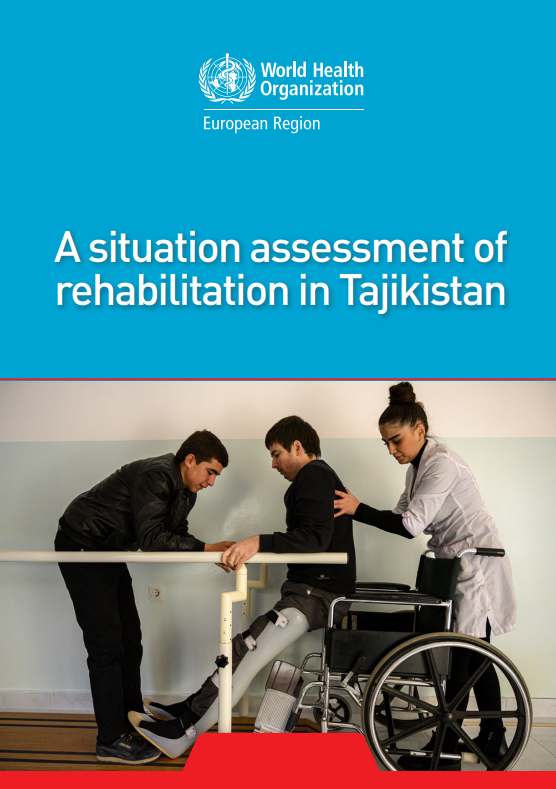
This publication provides an overview of the rehabilitation landscape in Tajikistan as of 1 December 2022. It summarizes notable accomplishments, identifies requirements and highlights opportunities for improvement within the rehabilitation sector in Tajikistan. The assessment was carried out under the guidance of the Ministry of Health and Social Protection of the…
This situational analysis used the UNPRPD Guidance for Conducting a Situational Country Analysis of Persons with Disabilities in Humanitarian Contexts to frame interview guides, the analysis framework, and this final report. However, given the rapidly changing and deteriorating nature of the situation, the guidance has been heavily adapted to remain relevant to the…