InnovateNow supports assistive technology startups to scale.
All Resources
Showing 71 - 80 of 488
Results are ordered by date, with most recent published resources shown first.
Use the other filters to customize your search.
Results are ordered by date, with most recent published resources shown first.
Use the other filters to customize your search.
It is a free database of over 65,000 trials, reviews and guidelines evaluating physiotherapy interventions.
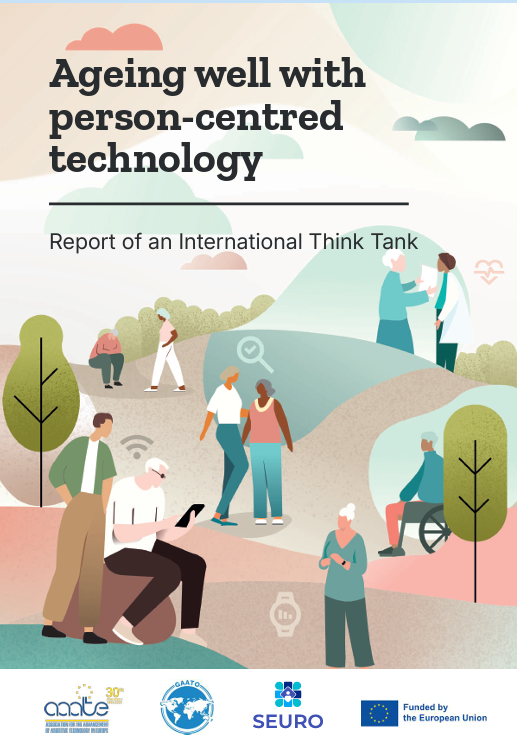
This document is the result of the work of an International Think Tank on Ageing and Technology. The aim of the Think Tank was to discuss with experts from different countries in the world the challenges related to the uptake and use of “technologyenabled person-centred assistive solutions” by older adults (and their care networks), for different purposes, in…
This report provides a detailed examination of the current landscape of neurotechnology, specifically exploring both its potential benefits and challenges from a global health perspective. The landscape analysis focuses on four emerging subcategories of neurotechnology, namely: neuroimaging, the braincomputer interface (BCI), neuromodulation, and neurological devices.
The Access to safe, effective and quality-assured health products and technologies: roadmap for WHO action 2025–2030 outlines to Member States, and other stakeholders WHO’s unique role and approach for increasing access to safe, effective and quality-assured health products and technologies in order to reach Sustainable Development Goal targets for achieving…
This research report compiles and analyse accurate and current information on the prevalence and drivers of unmet health and social care needs among older populations of the Region, to enable governments and health care agencies to design and implement policies to meet the needs of the changing population. This includes the need for assistive technology.
A life course approach addresses newborns, children, adolescents, adults, older people and the next generation. It contributes to longer, healthier lives by optimizing health trajectories across the life course, increasing people’s health capacities in each life stage, and enabling people’s well-being. This framework, across five sections, considers how to put a life…
The object of this evaluation is the WHO Policy on Disability and aims to assess the implementation of disability inclusion across all three levels of WHO headquarters, Regional, and Country Offices – spanning both operations and programmatic work. This evaluation covers the period from 2019 to 2024.
The primary objective of the COVID-19 global response is to slow and stop transmission, find, isolate and test every suspect case, and provide timely appropriate care of patients with COVID-19. This living guideline reflects recommended practice, inclusive of the provision of rehabilitation and assistive products.
This document presents the national priority list of assistive products for the Democratic Republic of Congo. It is designed to be used to guide the provision of assistive products and services in the country.