El modo en que pueden aprovecharse las prácticas de financiación sanitaria para promover la prestación de servicios de rehabilitación es limitado. Este documento es el primer recurso de la OMS sobre financiación sanitaria de la rehabilitación. En él se examinan las prácticas actuales de financiación de los servicios de rehabilitación, se enmarcan
En él se examinan…
Unlocking HER potential: Gender equality through equitable access to assistive technology
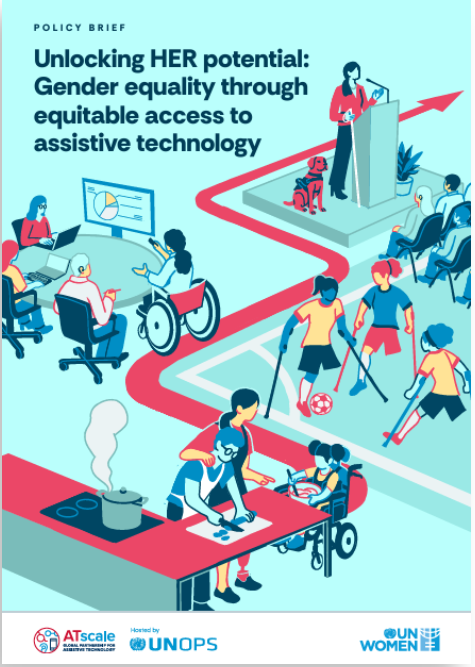
Jointly developed by UN Women and ATscale, this policy brief highlights the critical role of assistive technology in accelerating gender equality. It emphasizes how assistive technology fosters the meaningful participation of women and girls across all spheres of life.
Access to assistive technology is a critical enabler of the enjoyment of multiple internationally recognized human rights, particularly for persons with disabilities and older people. It is a prerequisite for women’s full and effective participation in all areas of life—from education and employment to leadership and digital spaces. Despite its life-changing potential, millions of women and girls are currently excluded by systems that fail to provide gender-responsive, safe, and accessible solutions.
Access to assistive technology is a critical enabler of the enjoyment of multiple internationally recognized human rights, particularly for persons with disabilities and older people. It is a prerequisite for women’s full and effective participation in all areas of life—from education and employment to leadership and digital spaces. Despite its life-changing potential, millions of women and girls are currently excluded by systems that fail to provide gender-responsive, safe, and accessible solutions.
Detalles
Nombre de la editorial:
UN Women and ATscale
Página web de la editorial:
https://atscalepartnership.org/
Idiomas:
English
AT Category Focus:
All
País o región:
Global
Categorías:
Factsheet or brief
Recursos relacionados
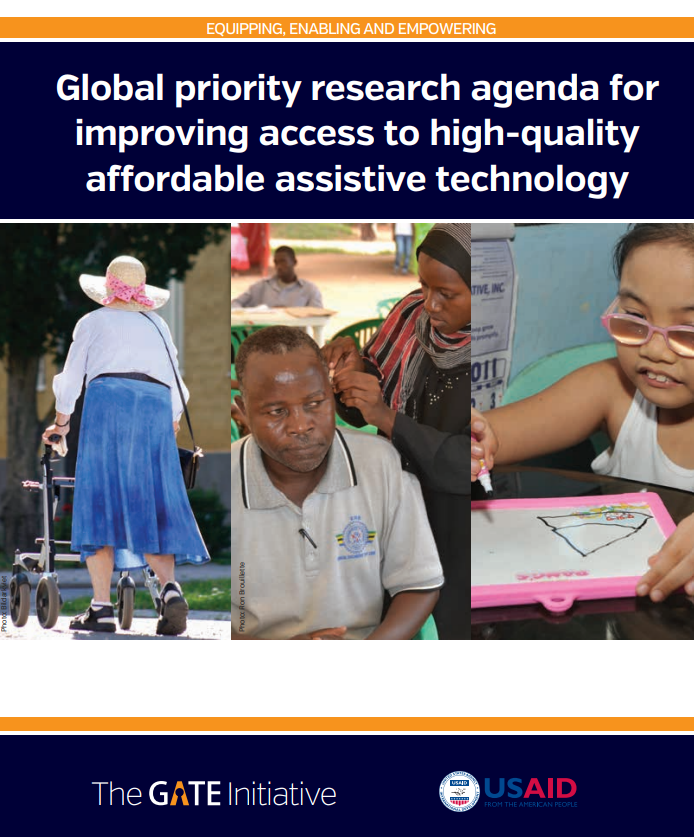
El propósito de este informe es compartir la agenda de investigación prioritaria global resultante e invitar a investigadores, estados, agencias donantes, grupos de usuarios, sociedades civiles y otras partes interesadas a iniciar/apoyar actividades de investigación que contribuyan a cerrar la brecha entre la necesidad global de tecnología de asistencia y la…
A fin de satisfacer las necesidades de los usuarios, es preciso adoptar un nuevo planteamiento que reconozca el valor de la tecnología de apoyo considerando cómo el ecosistema de innovación de la tecnología de apoyo crea un valor económico y social significativo. Para liberar todo el potencial del valor de la tecnología de apoyo, este documento propone un enfoque…
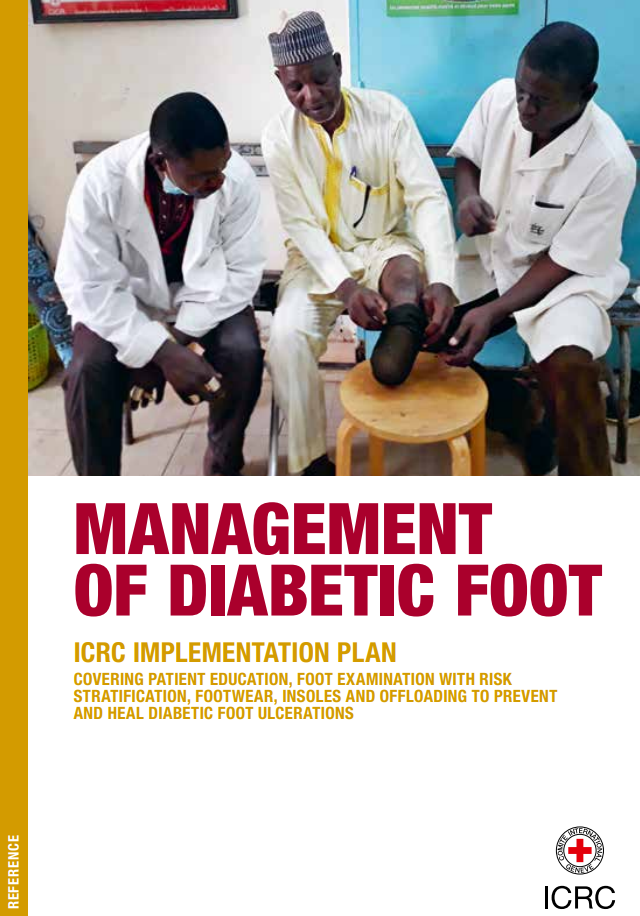
El documento es un plan de aplicación para el tratamiento del pie diabético, que abarca la educación del paciente, el examen del pie con estratificación del riesgo, el calzado, las plantillas y la descarga para prevenir y curar las úlceras del pie diabético.
El documento presenta el marco de competencias para el autocuidado, un conjunto de normas de competencia globales para el personal sanitario y asistencial con el fin de apoyar el autocuidado de las personas, incluida la provisión de productos de autocuidado.
La OMS recomienda intervenciones de autocuidado, incluidos productos médicos y de asistencia para cada país y entorno económico, como componentes críticos en el camino para alcanzar la cobertura sanitaria universal (CSU), promover la salud, mantener el mundo seguro y servir a los vulnerables.