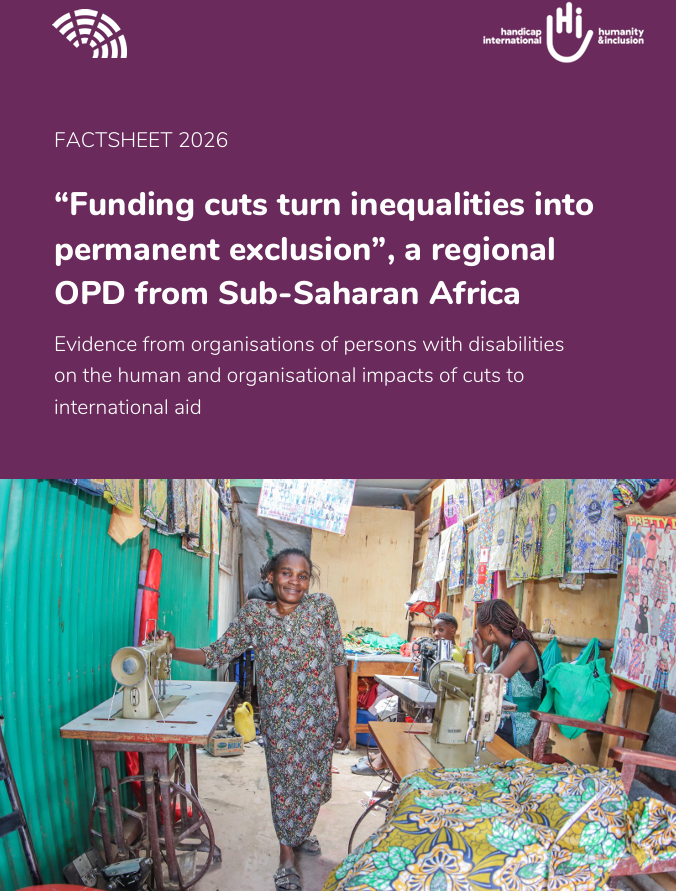
Presents findings from a 2026 survey of organisations of persons with disabilities about reductions in international aid. Documents effects on organisations and the people they represent, and proposes measures to protect disability-inclusive assistance.
All Resources
Showing 1 - 10 of 488
Results are ordered by date, with most recent published resources shown first.
Use the other filters to customize your search.
Results are ordered by date, with most recent published resources shown first.
Use the other filters to customize your search.
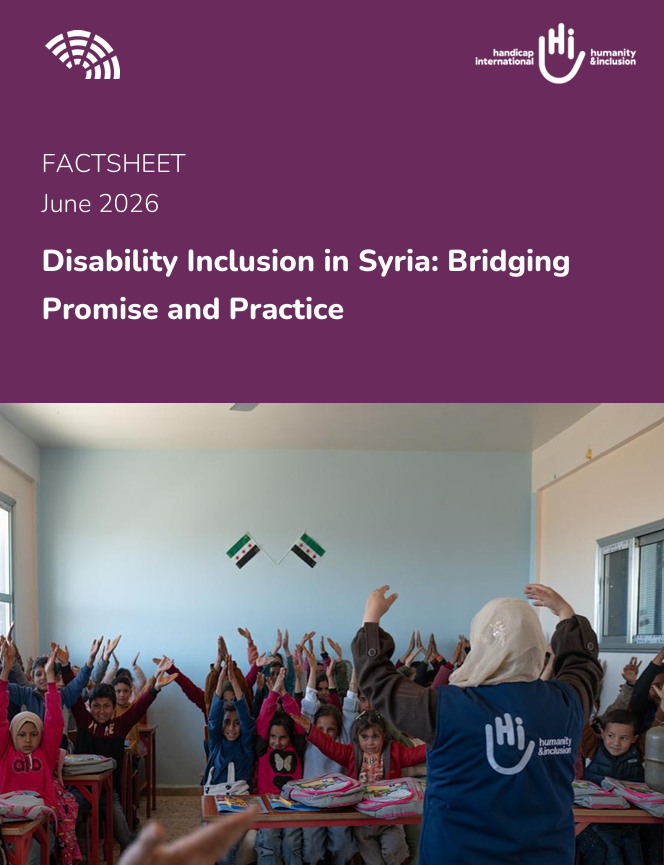
Examines disability inclusion in Syria’s humanitarian response and recovery, covering rehabilitation, psychosocial support, displacement, health and education. Combines existing evidence with first-hand accounts and consultations to identify service gaps and priorities for inclusive recovery.
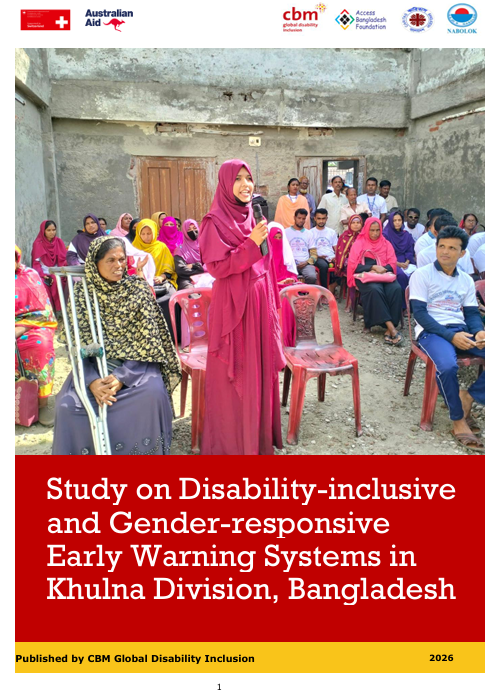
Examines barriers faced by persons with disabilities and women in accessing early warnings in Bangladesh. Provides recommendations for accessible communication, inclusive participation and more effective disaster preparedness.
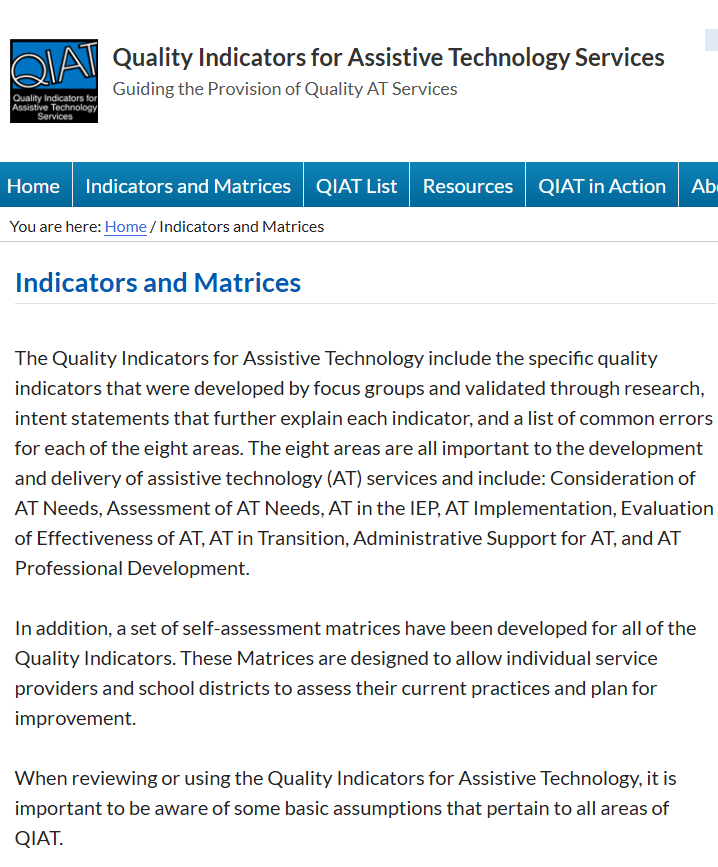
A set of quality indicators and self-assessment matrices covering eight areas of school AT services, from considering and assessing needs to implementation, evaluation, transition and professional development. Schools and service teams can use the matrices to review practice and plan improvements. The framework is grounded in the US school and individualised…
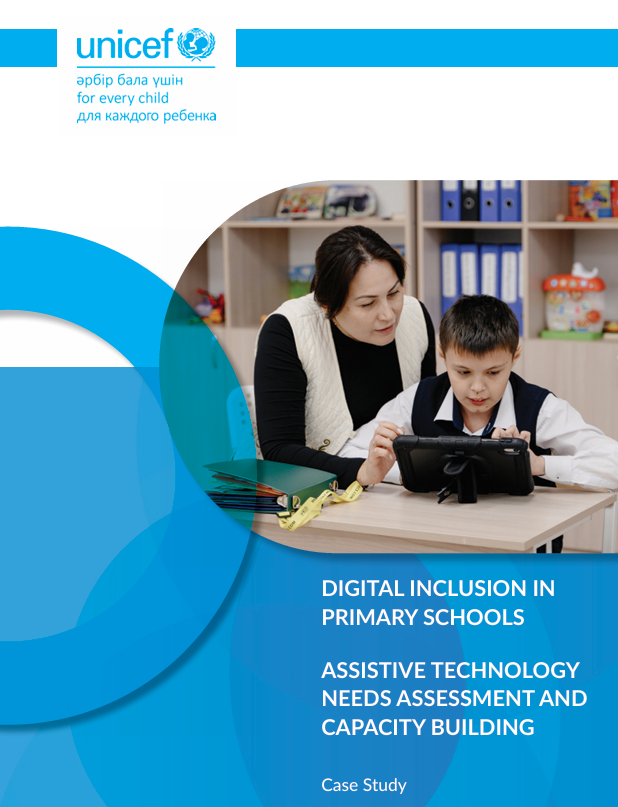
A case study of Kazakhstan’s 2025 work to build an AT and augmentative and alternative communication support system for schools, including assessment tools, educator training, devices, resource sets and a national procurement catalogue.
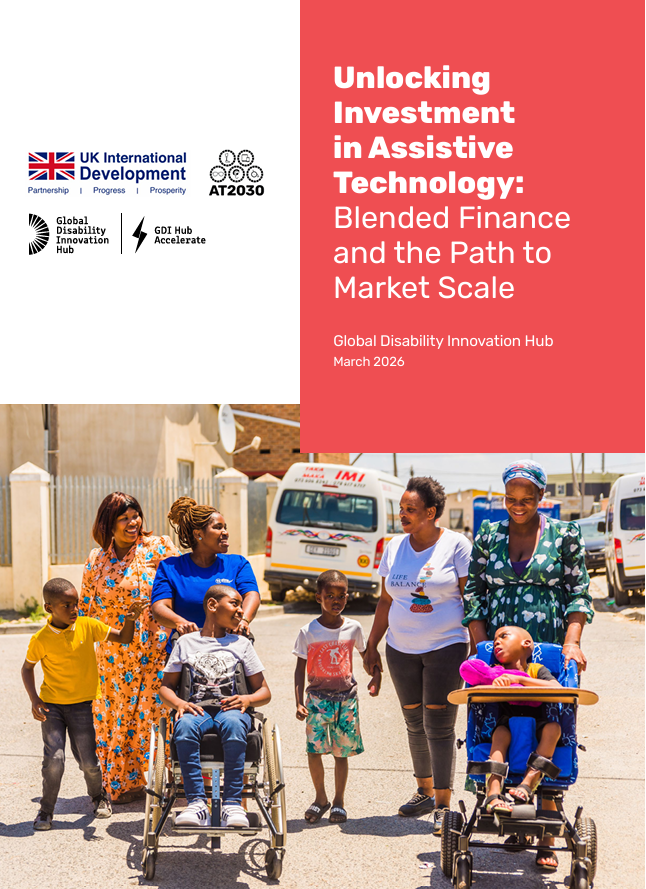
A financing and market-systems report explaining how blended finance can help growth-stage AT ventures overcome capital, procurement, regulatory and investor-knowledge barriers and move from innovation to sustainable scale.
A concise government monitoring instrument containing ten standardized indicators for assessing national progress on policies, programmes, workforce, priority products, research, data, investment and accessible environments.
A national market assessment examining demand, supply, affordability, quality, regulation and financing for wheelchairs, hearing aids, prostheses and orthoses in Azerbaijan, based principally on 2024 data.
A country study examining whether smartphones, built-in accessibility features, mobile data and digital-skills training can improve access, independence and participation for people with visual and hearing disabilities in India.
An accessible policy-oriented summary of the Brazil study, highlighting effects of smartphone provision and digital-skills training for blind, partially sighted, Deaf and hard-of-hearing participants and recommendations for affordability and accessibility.