how health financing practices can be harnessed to promote the delivery of rehabilitation services is limited. This document is the first WHO resource on health financing for rehabilitation. It considers current practices for financing rehabilitation services, frames
major challenges and opportunities, and offers guidance to decision-makers engaged in strengthening…
Unlocking HER potential: Gender equality through equitable access to assistive technology
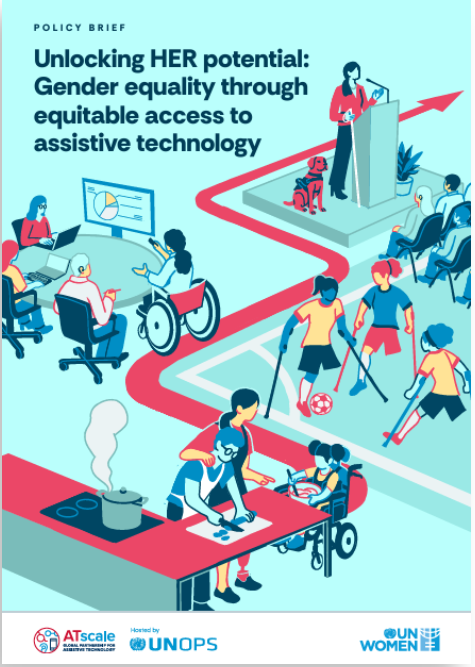
Jointly developed by UN Women and ATscale, this policy brief highlights the critical role of assistive technology in accelerating gender equality. It emphasizes how assistive technology fosters the meaningful participation of women and girls across all spheres of life.
Access to assistive technology is a critical enabler of the enjoyment of multiple internationally recognized human rights, particularly for persons with disabilities and older people. It is a prerequisite for women’s full and effective participation in all areas of life—from education and employment to leadership and digital spaces. Despite its life-changing potential, millions of women and girls are currently excluded by systems that fail to provide gender-responsive, safe, and accessible solutions.
Access to assistive technology is a critical enabler of the enjoyment of multiple internationally recognized human rights, particularly for persons with disabilities and older people. It is a prerequisite for women’s full and effective participation in all areas of life—from education and employment to leadership and digital spaces. Despite its life-changing potential, millions of women and girls are currently excluded by systems that fail to provide gender-responsive, safe, and accessible solutions.
Details
Publisher Name:
UN Women and ATscale
Publisher Website:
https://atscalepartnership.org/
Languages:
English
AT Category Focus:
All
Country or Region:
Global
Categories:
Factsheet or brief
Related Resources
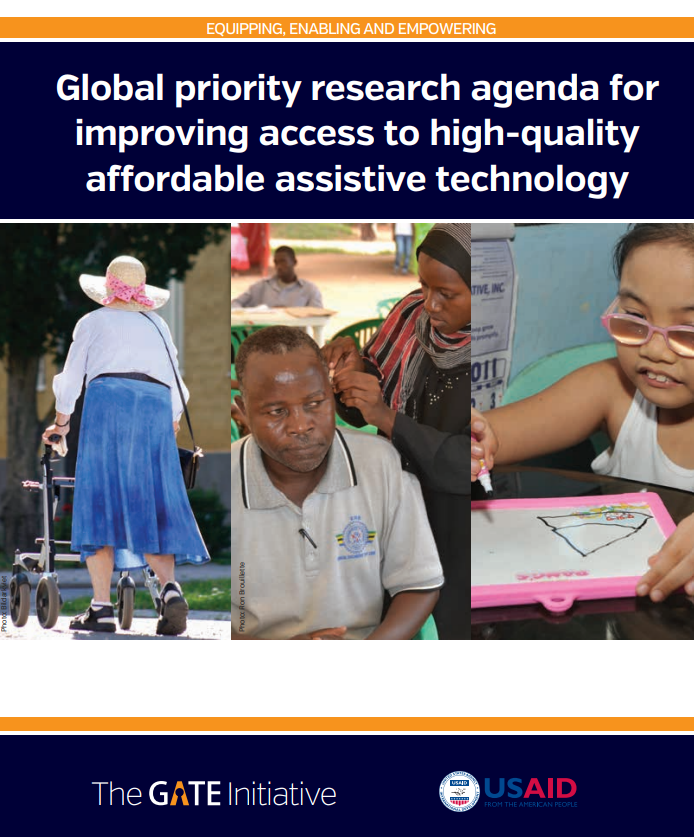
Global priority research agenda for improving access to high-quality affordable assistive technology
The purpose of this report is to share the resulting global priority research agenda and to invite researchers, states, donor agencies, user groups, civil societies and other stakeholders to initiate/support research activities that contribute to closing the gap between global assistive technology need and unmet need.
In order to meet user need, new thinking is needed that recognises the value of AT by considering how the AT innovation ecosystem creates meaningful economic and social value. In order to unleash the full potential of AT value, this paper proposes a public sector-led, mission-oriented approach.
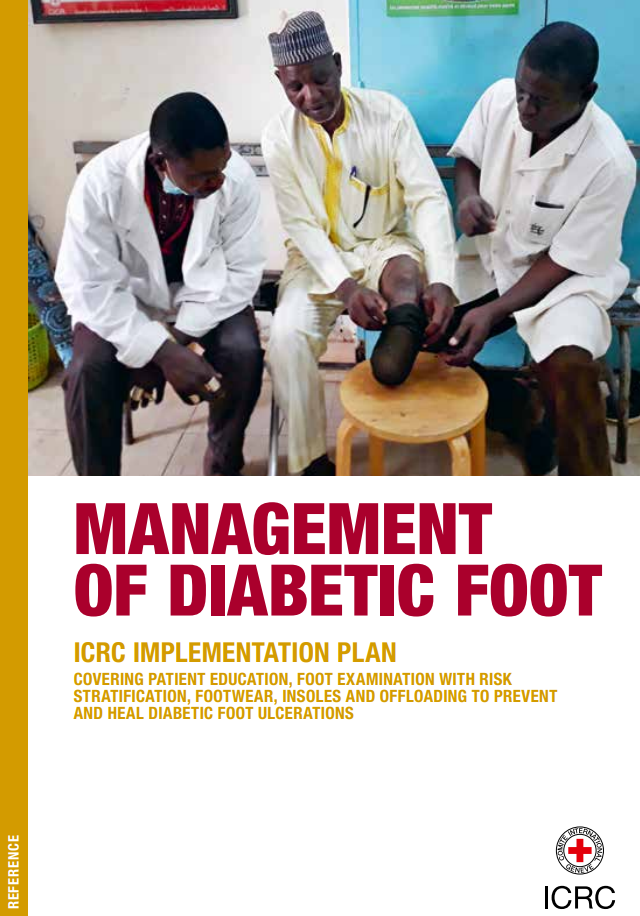
The document is an implementation plan for the management of diabetic foot, covering patient education, foot examination with risk stratification, footwear, insoles, and offloading to prevent and heal diabetic foot ulcerations.
The document presents the Self-care competency framework, a set of global competency standards for health and care workers to support people's self-care, including the providion of self care products
WHO guideline on self-care interventions for health and well-being, 2022 revision: executive summary
WHO recommends self-care interventions, including medical and assisitve products for every country and economic setting as critical components on the path to reaching universal health coverage (UHC), promoting health, keeping the world safe and serving the vulnerable.