The present note was prepared by the Secretariat in consultation with United Nations entities, representatives of civil society and other relevant stakeholders to facilitate the round-table discussion on the theme “Innovation and technology advancing disability rights”. The Secretariat hereby transmits the note, as approved by the Bureau of the Conference, to the…
All Resources
Showing 321 - 330 of 488
Results are ordered by date, with most recent published resources shown first.
Use the other filters to customize your search.
Results are ordered by date, with most recent published resources shown first.
Use the other filters to customize your search.
Guidelines to ensure communication is accessible, and disability inclusive
Increased digitalisation creates both a challenge and an opportunity for the participation of persons with disabilities. Digital services can remove barriers encountered in the physical world. At the same time, online services and websites that are not accessible, can create new types of barriers. In many cases, it can be difficult for a website user to understand…
The document discusses the rights of people with disabilities, including their right to health, education, and employment. It highlights the challenges faced by people with disabilities, such as poverty, lack of access to healthcare, and social exclusion. It highlights the importance on the WHA resolution on Access to Assistive Technology.
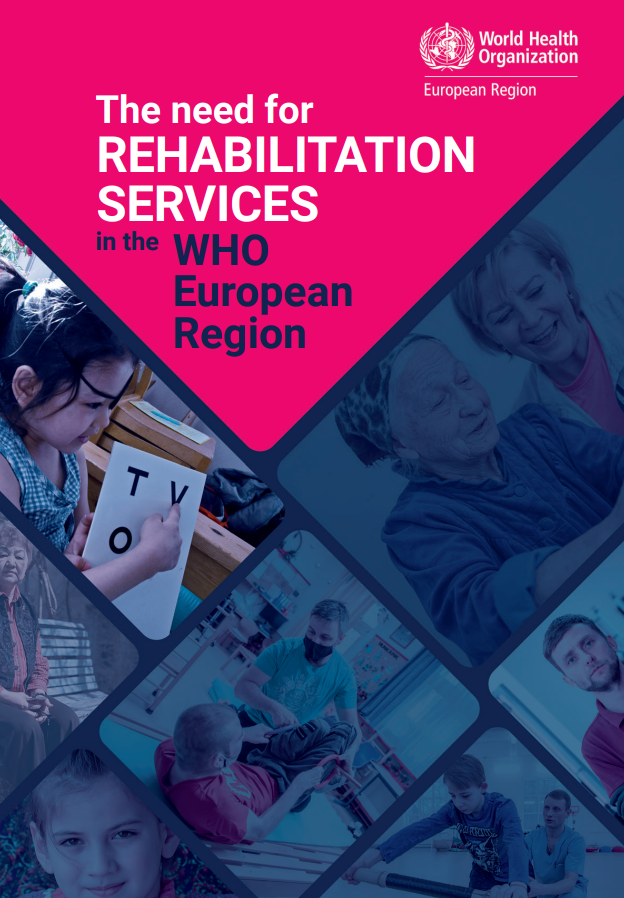
In the WHO European Region in 2019, 394 million people had a health condition amenable to rehabilitation during its course. This represents two in five people. Musculoskeletal disorders, sensory impairments and neurological disorders were the most prevalent groups of health conditions. The significant rehabilitation needs in the overall population require strong…
WHO guideline on self-care interventions for health and well-being, 2022 revision: executive summary
WHO recommends self-care interventions, including medical and assisitve products for every country and economic setting as critical components on the path to reaching universal health coverage (UHC), promoting health, keeping the world safe and serving the vulnerable.
The Global report on assistive technology: Summary provides an overview of the WHO and UNICEF Global report on assistive technology, which was developed in response to the 2018 World Health Assembly Resolution on Assistive Technology and launched in May 2022. The Summary will be useful for a broad range of stakeholders and is intended to facilitate the widest…
An estimated 1.3 billion people – or 16% of global population worldwide – experience a significant disability today. Persons with disabilities have the right to the highest attainable standard of health as those without disabilities. However, the WHO Global report on health equity for persons with disabilities demonstrates that while some progress has been made in…
An estimated 1.3 billion people – or 16% of global population worldwide – experience a significant disability today. Persons with disabilities have the right to the highest attainable standard of health as those without disabilities. However, the WHO Global report on health equity for persons with disabilities demonstrates that while some progress has been made in…
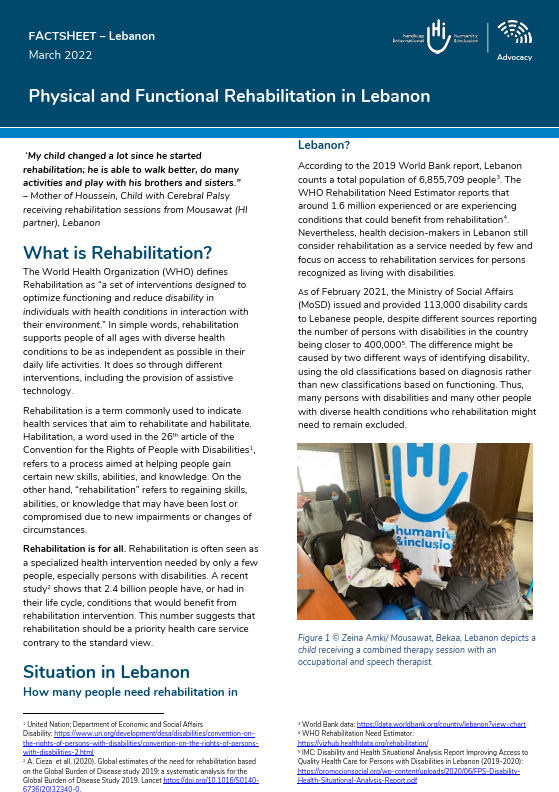
Leaflet on Physical and Functional Rehabilitation in Lebanon